
Skin Cancer
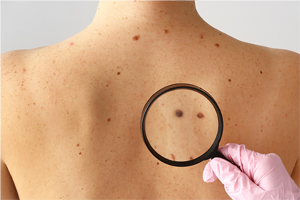
Skin Cancer Surveillance and Treatment
Skin cancer is the most common form of cancer in the United States, affecting 1 in 5 Americans during their lifetime. In many cases, the sun damage that leads to skin cancer occurs early in life. Fortunately, when detected early, most skin cancers are highly treatable and often curable, making routine surveillance and prompt treatment essential.
Skin Cancer Surveillance
Skin cancer surveillance involves regular full-body skin examinations performed by a board-certified dermatologist to detect skin cancer at its earliest stages. During these exams, existing moles and lesions are carefully evaluated and monitored for subtle changes in size, shape, color, or texture that may indicate basal cell carcinoma, squamous cell carcinoma, or melanoma.
Who Should Have Regular Skin Cancer Screenings?
All adults should have routine skin cancer screenings as part of their preventive health care. Patients with higher risk factors, including a personal or family history of skin cancer, fair skin, excessive sun exposure, multiple or atypical moles, or a weakened immune system, may benefit from more frequent examinations. Early detection through routine screening dramatically improves treatment outcomes and can save lives.
The most common forms of skin cancer include:
Skin Cancer Treatment Options
Treatment for skin cancer is tailored to each patient and depends on the type, size, location, and stage of the cancer. Our dermatology practice offers comprehensive skin cancer treatment options, including:
- Mohs micrographic surgery
- Image-Guided Superficial Radiotherapy (IG-SRT)
- Surgical excision
- Cryotherapy for precancerous lesions
- Topical treatments for early skin cancers
- Ongoing surveillance and follow-up care
Our goal is to remove cancer completely while preserving healthy tissue and achieving the best possible cosmetic and functional outcome.
Mohs Micrographic Surgery
Mohs micrographic surgery is considered the gold standard for treating many skin cancers, particularly those on the face and other sensitive areas. This advanced technique allows for precise, layer-by-layer removal of cancerous tissue with immediate microscopic examination, resulting in the highest cure rate while sparing as much healthy skin as possible.
Image-Guided Superficial Radiotherapy (IG-SRT)
Image-Guided Superficial Radiotherapy (IG-SRT) is a non-surgical treatment that uses advanced ultrasound imaging to guide targeted radiation for certain basal cell and squamous cell skin cancers. During your consultation, our board-certified dermatologists will review whether this surgery-free option may be appropriate for your specific diagnosis and treatment goals.
Surgical Excision
Surgical excision is a common and effective method for removing many skin cancers. During the procedure, the lesion is removed along with a small margin of surrounding tissue. The tissue is then evaluated to confirm complete removal. During your consultation, we will discuss whether excision or another treatment option is most appropriate for your individual case.
Topical Treatments for Early Skin Cancers
Certain early or superficial skin cancers may be treated with prescription topical medications that target abnormal cells or stimulate the body’s immune response. Because treatment decisions vary from patient to patient, our dermatologists will review whether topical therapy may be an appropriate option for your condition.
Ongoing Monitoring and Follow-Up Care
Patients who have been treated for skin cancer require continued surveillance to monitor for recurrence or the development of new skin cancers. Regular follow-up visits and patient education play a vital role in long-term skin health and cancer prevention.
Schedule a Skin Cancer Screening
If you are due for a skin cancer screening, or are concerned about a suspicious mole or lesion, our board-certified dermatologists are here to help. Early detection saves lives. Contact our office today to schedule a consultation.